
Most companies don’t see the difference until they’re already behind.
With traditional IT (e.g., Cloud, CRM, ERP) the logic was always the same. Buy software, implement it, and the business gets faster or better organized. People kept doing largely the same jobs. While these investments were useful, the nature of the work itself didn’t change.
AI changes the nature of the work.
A support team that once handled every ticket now oversees a system that resolves 60–80% autonomously. That’s not the same job done faster, but a different job entirely. And when you start pulling that thread across an organization, what you’re really doing is redesigning how the business operates.
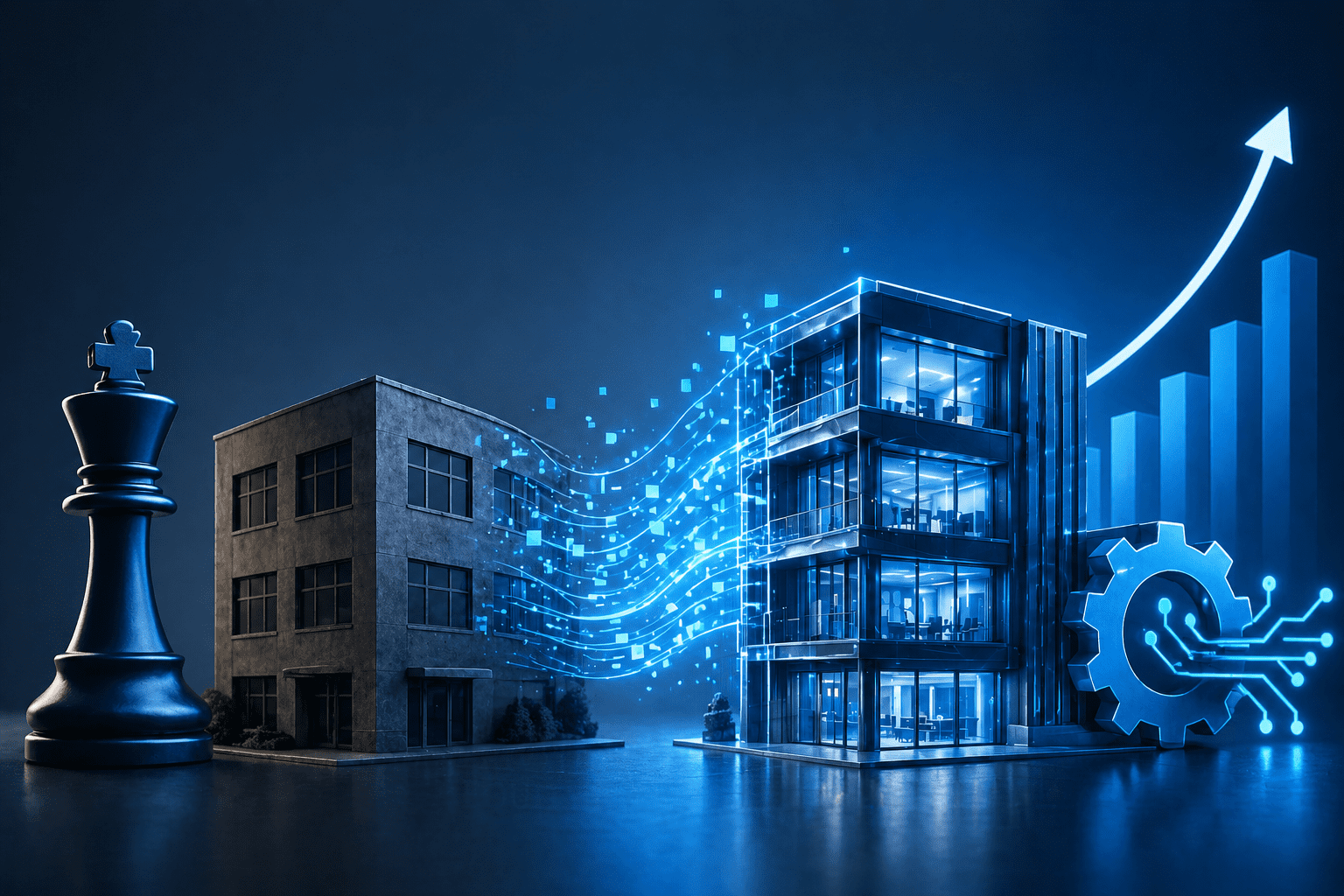
Which is also where most of the financial upside actually lives. Typical tech investments improve efficiency by 10–30%. When AI is implemented against the right operating model, it removes entire cost layers. This is the kind of change that shows up permanently in your margin structure, not just your productivity metrics.
Getting there requires treating AI as an operating model problem rather than a software problem. The value isn’t in the tool itself, but in what you restructure around it: how work flows, how the org is designed, how costs are built. Most AI initiatives never get to that conversation, which is why most of them stall.
It’s the pattern we’ve seen firsthand across our client work at Cuesta Partners.
We built a predictive model for a home nursing company that helped them detect minute signs of patient deterioration 3-5 days before they were at risk for hospitalization, providing the opportunity for additional preventive care and interventions to keep patients safe at home. But the AI technology was only part of the story: revising the operating model to re-orient around this information and the daily alerts for flagged patient, as well as tracking follow up, is what really drove successful results. Without that, the AI tool could have been just another screen.
In another example, a custom manufacturer was growing fast and choking on its own design process — every order meant engineers building Bills of Materials by hand, and more headcount wasn’t going to fix it. We built an AI Configurator that now handles 80% of BOMs automatically, cuts lead time by 60–75% and gives leadership margin visibility across the product line they’d never had before. The engineers are still there, but they are now doing higher-value work.
Lastly, for a pharma logistics platform managing $20B in healthcare supply chain freight, the problem wasn’t the data, it was a lack of clear signal. There was no way to flag at-risk shipments before the window to act closed. Therefore, we built a predictive system that changed that resulting in 74% of flagged issues becoming actionable and creating ~$3M in value over three years.
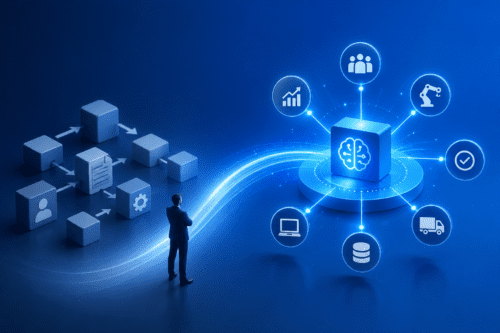
In each case, the shift was the same: from humans doing the work to humans running systems that do the work.
Most AI conversations in mid-market companies start with tools and vendors. The more useful conversation starts with the operating model and centers around what changes, what doesn’t, and what the business looks like on the other side.
Mapping out end-to-end business workflows and identifying key ‘choke’ points in the process is a great place to start to understand where these efficiency opportunities exist.